
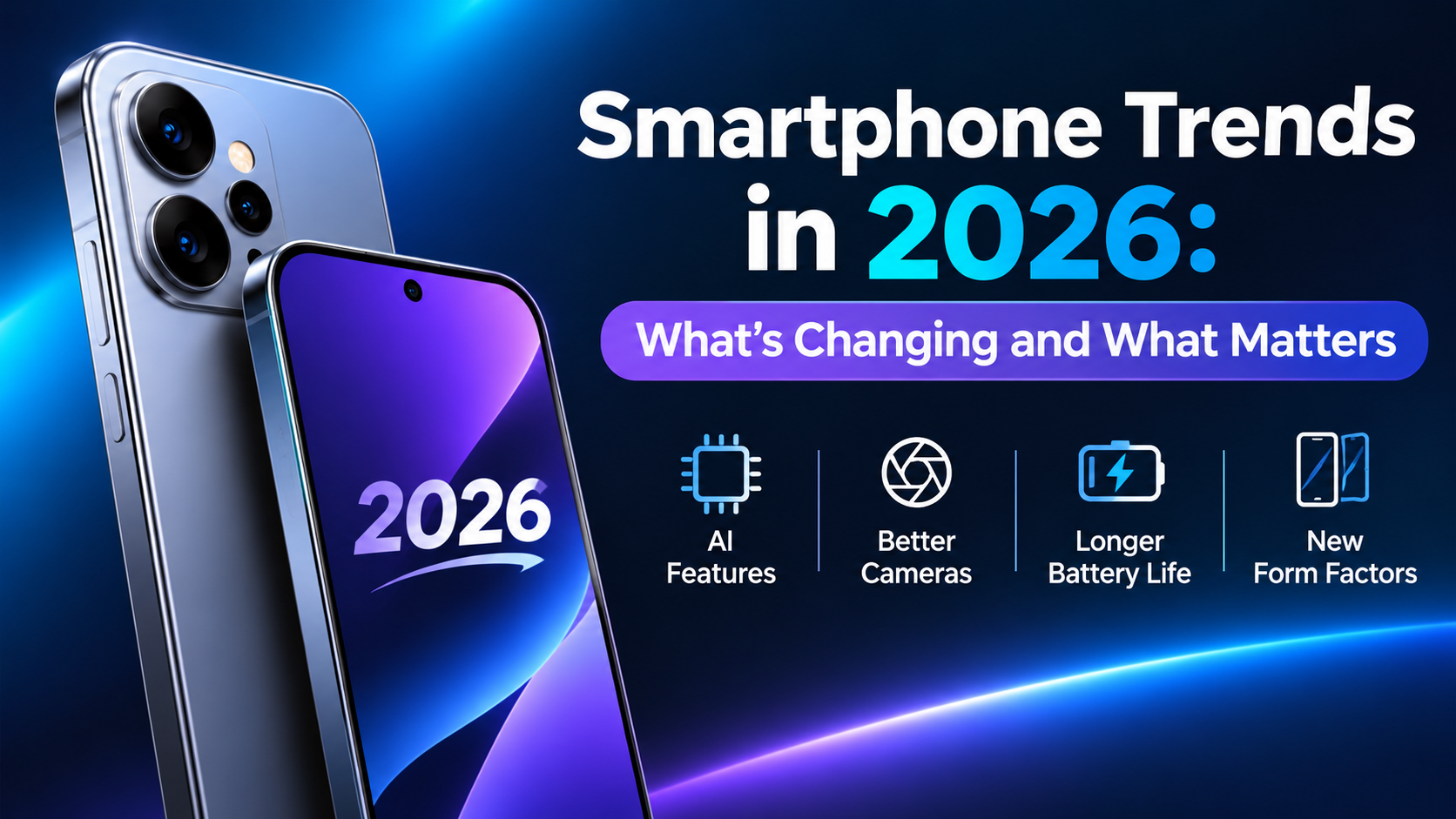
Smartphone Trends in 2026: What’s Changing and What Matters
Smartphones continue to evolve, but the biggest improvements are not always the most obvious ones. In 2026, the conversation is increasingly about smarter software, practical AI features, longer battery life, improved cameras, and devices that remain useful for years.
For consumers in the United States, understanding these trends can make choosing a new phone easier. Whether you’re considering an iPhone, a Samsung Galaxy device, a Google Pixel, or another Android smartphone, here are the developments worth paying attention to.
1. Artificial Intelligence Is Becoming More Practical
Artificial intelligence is one of the most important areas of smartphone development.
Instead of relying entirely on cloud services, some AI tasks can now run directly on a phone. This approach, often called on-device AI, can improve responsiveness and reduce the need to send certain information to remote servers.
Depending on the device and software, AI-powered tools may help users:
- Summarize notes and messages.
- Translate conversations.
- Edit photos and remove unwanted objects.
- Search for information using images.
- Organize everyday tasks.
However, not every AI feature is equally useful. Buyers should look beyond marketing claims and consider whether a feature works reliably, supports their language, and requires an internet connection or subscription.
2. Smartphone Cameras Are Getting Smarter
Camera quality remains a major reason people upgrade their phones.
Although manufacturers continue to improve camera sensors and lenses, software processing also plays a significant role in modern mobile photography.
Computational photography can help improve low-light images, balance bright and dark areas, and produce more consistent portraits.
When comparing smartphone cameras, pay attention to real-world performance rather than megapixel counts alone.
Useful factors include image detail, natural colors, optical zoom, video stabilization, and how well the camera handles moving subjects.
3. Battery Life Matters More Than Ever
A powerful smartphone is less useful if it cannot comfortably last through the day.
Battery efficiency depends on several factors, including processor design, screen brightness, background activity, network conditions, and software optimization.
Some manufacturers are also exploring newer battery technologies and higher-capacity designs.
For buyers, the most useful questions are straightforward: How long does the phone last during normal use? How quickly does it charge? And how well is the battery expected to hold up over time?
Independent battery testing can be more informative than capacity numbers alone.
4. Longer Software Support Is Changing Buying Decisions
Software updates are becoming an increasingly important part of a smartphone’s overall value.
Security patches help protect devices against known vulnerabilities, while operating system updates can introduce new features and improve compatibility.
A phone with several years of promised support may offer better long-term value than a similarly priced device with a shorter update policy.
Before buying, check the manufacturer’s official support commitment for the specific model.
5. Foldable Phones Are Expanding Consumer Choice
Foldable smartphones offer an alternative to traditional phone designs.
Some models unfold into larger displays suited to reading, multitasking, and watching videos. Others fold into smaller shapes for easier carrying.
However, foldable devices also involve trade-offs, including price, thickness, durability considerations, and repair costs.
They are worth exploring, but a conventional smartphone may still be the more practical choice for many buyers.
6. Performance Is About More Than Speed
Modern smartphone processors are designed to handle demanding applications, gaming, photography, and AI workloads.
But raw benchmark scores do not tell the whole story.
Thermal management, battery efficiency, memory, storage performance, and software optimization all affect the everyday experience.
For most users, smooth performance over several years matters more than having the highest possible benchmark result.
What Should You Look for When Buying a Smartphone in 2026?
Before choosing your next phone, consider these priorities:
- Battery life: Look for reliable, independent endurance tests.
- Camera quality: Compare real photos and videos.
- Software support: Check the official update policy.
- Performance: Focus on your actual needs.
- AI features: Prioritize tools you will genuinely use.
- Price and value: Compare the complete experience, not just specifications.
Final Thoughts
The most meaningful smartphone trends in 2026 are not necessarily about dramatic redesigns.
Smarter software, improved photography, battery efficiency, and longer support periods can make a greater difference to everyday users.
The best smartphone is not automatically the newest or most expensive model. It is the one that delivers the right combination of features, reliability, and long-term value for your needs.